Mê Cung Cave: ancient lives revealed through shells
Look beyond stalactites to the traces of ancient residents, and ask which evidence has been studied and which areas must remain untouched.
Mê Cung Cave offers more than beautiful formations: it also preserves traces of ancient residents. This guide suggests observations and questions, alongside details to confirm with your operator before choosing an itinerary.
Why shells matter as well as stalactites
The Hạ Long–Yên Tử World Heritage Management Board places Mê Cung on Lờm Bò Island, on itinerary VHL2. Its article of 13 August 2026 describes stream-snail and mountain-snail shells, freshwater molluscs and animal bones in cultural layers. These help researchers understand how prehistoric people used resources and adapted to their environment.
In one cave, ask both “How did this rock form?” and “How did people live here?” The second question adds settlement history to sightseeing without requiring archaeological vocabulary.
Three questions to take with you
Which traces have researchers studied here? Ask your guide to explain the information panels or interpretation. Do not assume a shell on the path is an archaeological object; appearance alone does not establish origin or age.
What do the traces suggest about everyday life? Start with food and shelter. Ask which points are research findings and which are explanatory interpretations. Children can observe first and ask questions rather than memorising dates.
What can be observed, and what must stay untouched? Ask about access limits. Do not collect shells, move stones or dig for evidence. Even a small object can lose contextual information when removed from its original position.
Confirm the stop, not just the route name
Mê Cung's inclusion in VHL2 does not mean every product sold under that route name enters the cave. Request a specific itinerary confirming:
- Whether you enter Mê Cung or only pass the area.
- How much time is allocated and whether interpretation is available.
- Whether steps and paths suit children or anyone with mobility difficulties.
- What happens if weather or operating conditions change.
These questions are more useful than choosing by a photograph alone. This article does not confirm ticket prices, opening hours or a specific vessel's operations; check when booking and before departure.
Remember the visit without taking anything from the cave
After leaving, write three notes: something you saw, something the guide explained and a question you still have. Families can each choose a detail to share. One small story can be more memorable than many photographs.
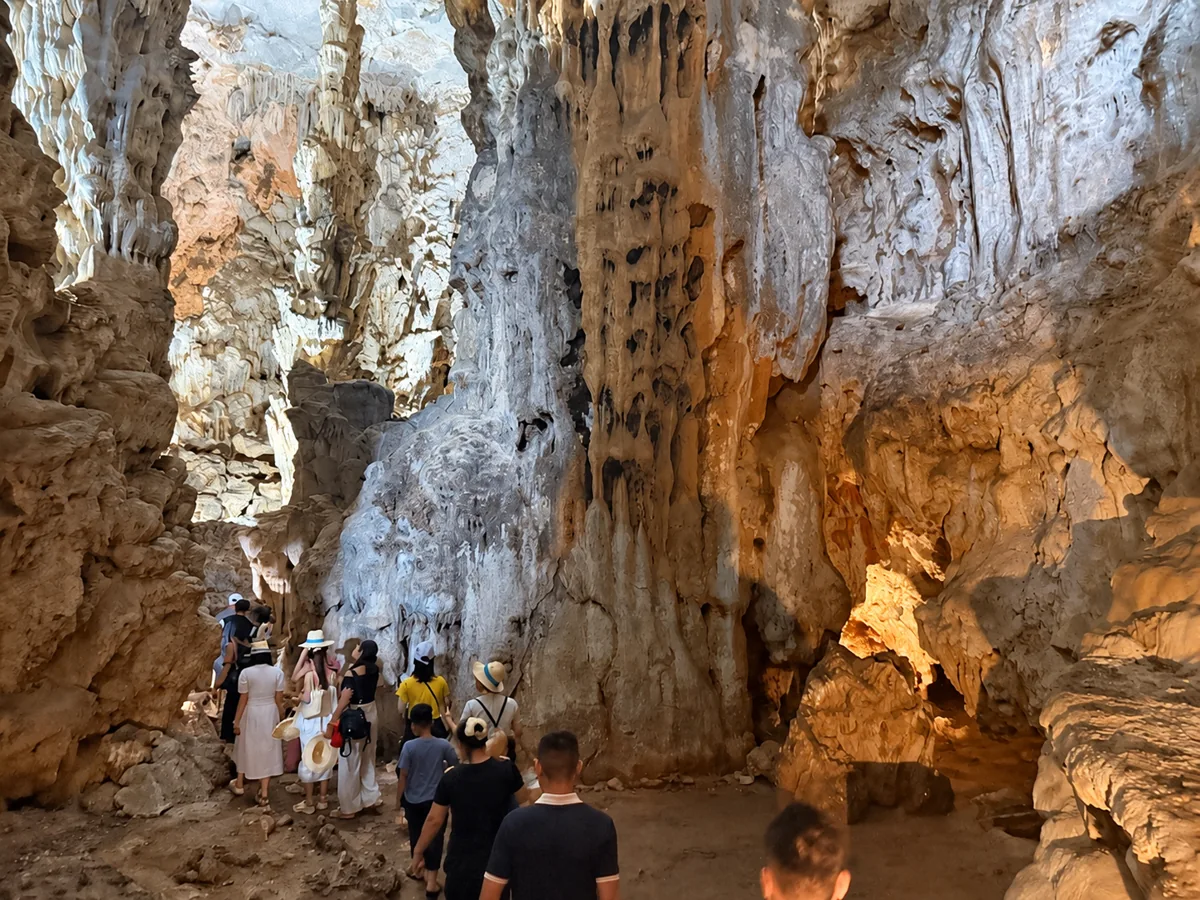
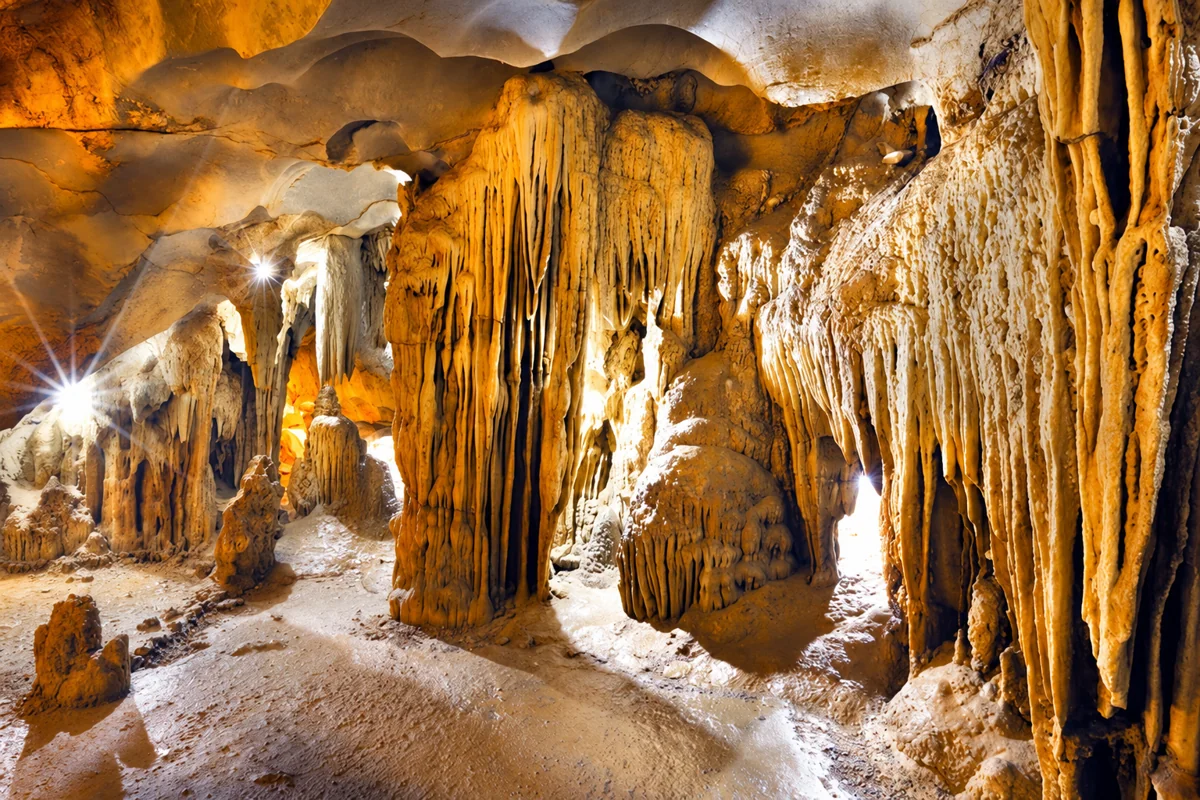
The cover shows cave formations, not close-up artefacts or archaeological evidence. It comes from the Hạ Long–Yên Tử World Heritage Management Board, with lighting and sharpness adjusted using AI from the reference image to illustrate the destination.
Sources
Checked on 24 October 2026. Questions and preparation tips are editorial guidance and do not replace the operator's notices.
Image credit: Hạ Long–Yên Tử World Heritage Management Board, Mê Cung article dated 13 August 2026. Reference photograph with lighting and sharpness adjusted using AI.