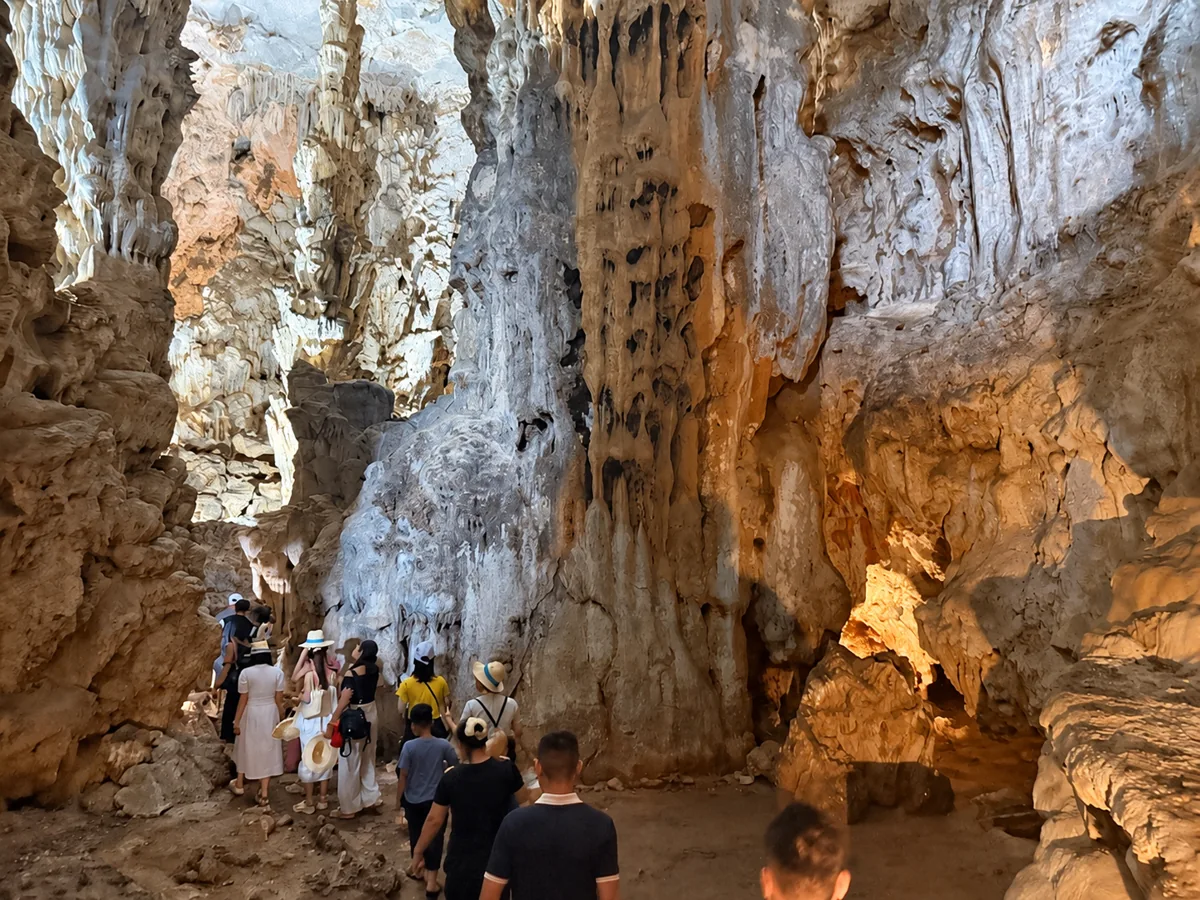
Hang Luồn monkeys: observe quietly and do not feed
Treat monkey sightings as encounters with wildlife, follow the visitor route and avoid feeding or disturbing the animals.
Wildlife, not a performance
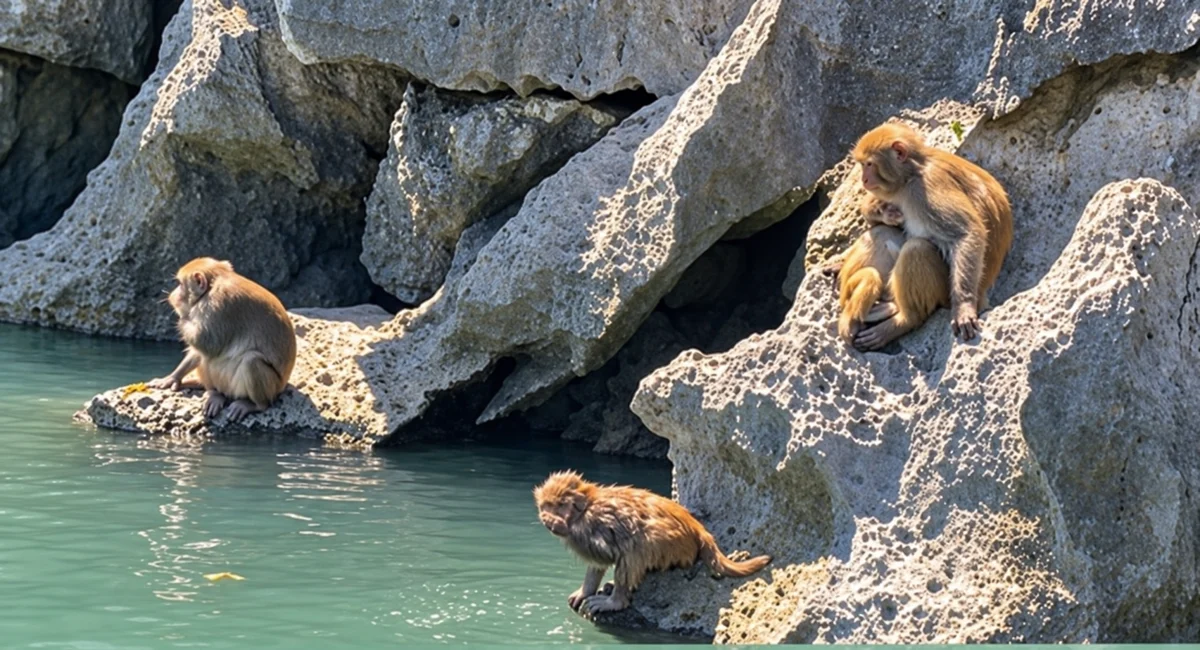
The monkeys at Hang Luồn add another possibility to a bay visit: life among the cliffs. The best approach is to observe without changing what they are doing, not to call them closer.
In its 18 October 2026 update, the Hạ Long–Yên Tử World Heritage Management Board reminds visitors not to feed monkeys indiscriminately, chase, catch or tease them, and to keep the environment clean. This is visitor guidance, not a performance schedule or a guarantee of sightings.
The suggestions below help families and friends put that advice into practice. Monkeys may not be visible on every trip; treat any encounter as a chance part of the journey.
Confirm the right destination and itinerary
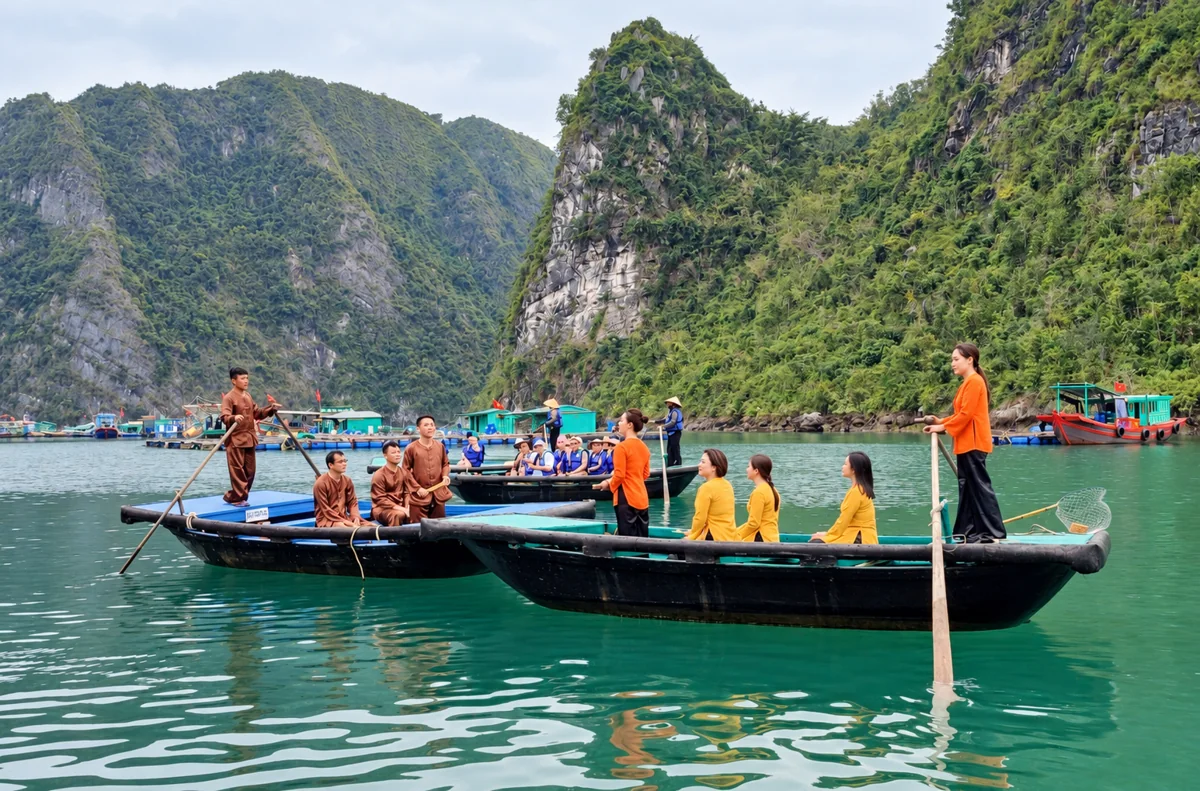
The authority places Hang Luồn in the Bồ Hòn island group, on sightseeing route 2. Its flooded passage connects the sea with a cliff-enclosed lagoon, reached by bamboo boat or kayak. It is not a dry cave you can walk into to find monkeys.
Ask the operator: “Does our itinerary stop at Hang Luồn, which activity is included, and where do we meet?” A route name does not replace the actual stop list for your boat.
Do not base all expectations on a close-up wildlife photo. Even without a sighting, passing under the rock arch and seeing the space open beyond it offers its own landscape experience.
Put food away before observing
Keep food in a closed bag so you are not handling an open snack while holding a phone. Explain to children beforehand that your snacks are for the family, not the animals.
If someone wants to use food for a photograph, suggest photographing the monkeys as they move naturally. Prepare a place in your bag for small wrappers before you need to find a bin.
Photograph the setting, not just a close-up face
Consider a wider frame with cliffs, water and the animal instead of asking the boat to move closer. A wide image shows where monkeys live. Use camera zoom where suitable, but accept a distant image rather than attracting or following them.
Children can notice whether an animal is standing on rock or moving and describe it in a sentence. This needs no shouting, feeding or perfect photograph.
Follow instructions about seating and movement. Do not change position suddenly for a camera angle; everyone aboard matters more than a rushed picture.
Leave their living space intact
A brief movement on the rocks may become more memorable than dozens of photographs. Your visit does not need a close-up monkey portrait to count.
Before leaving, check belongings, take rubbish with you and make sure nobody is using food to call monkeys. This leaves later visitors the same opportunity to observe nature.
The cover is archival monkey photography from the management authority, with clarity enhanced using ChatGPT Images. It was not photographed directly on 24 October 2026.
Sources checked on 24 October 2026: monkey-protection guidance updated 18 October 2026 and Hang Luồn destination information. Preparation and observation tips are editorial suggestions, not an operating timetable.
Image credit: Hạ Long–Yên Tử World Heritage Management Board, update of 18 October 2026. Archival image with clarity adjusted using ChatGPT Images, composition and landscape retained; not publication-day photography. WebP 1200×650, 180,520 bytes.