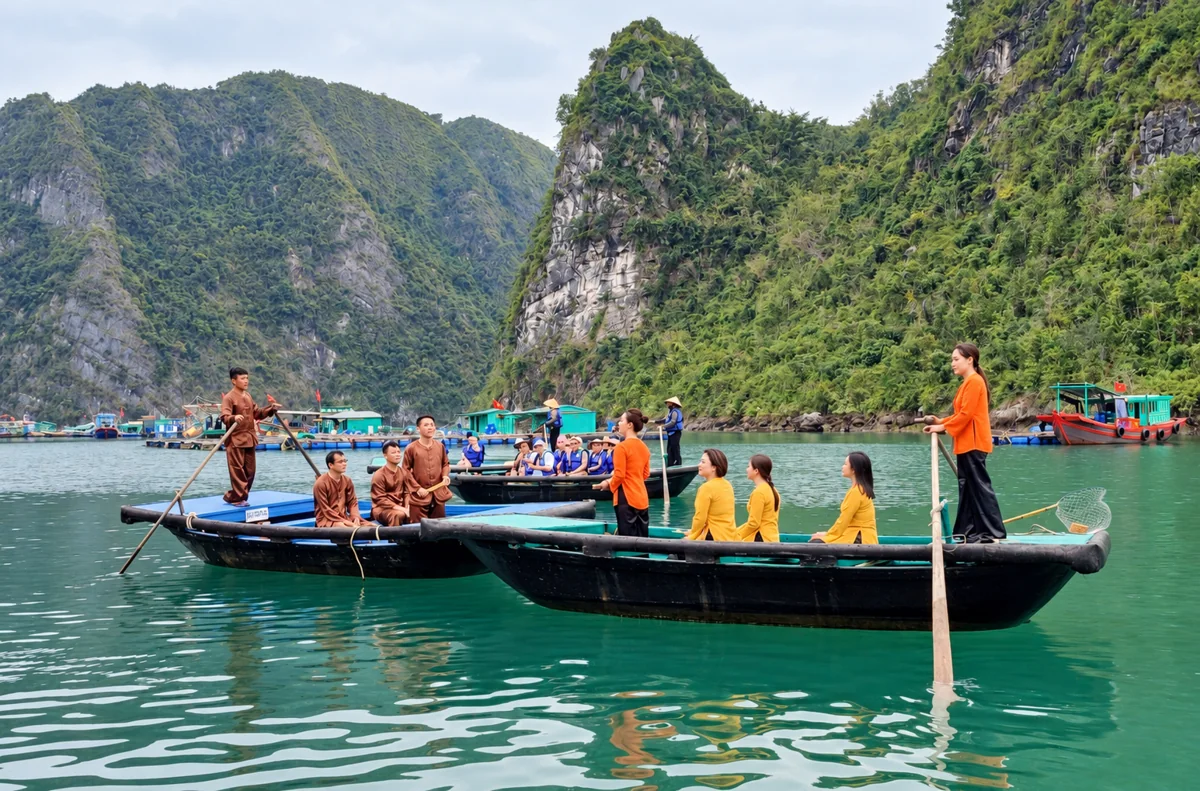
Đầu Gỗ Cave: three details worth a closer look
Notice cave formations, changing light and the meaning of a fossil cave, while following the permitted visitor route.
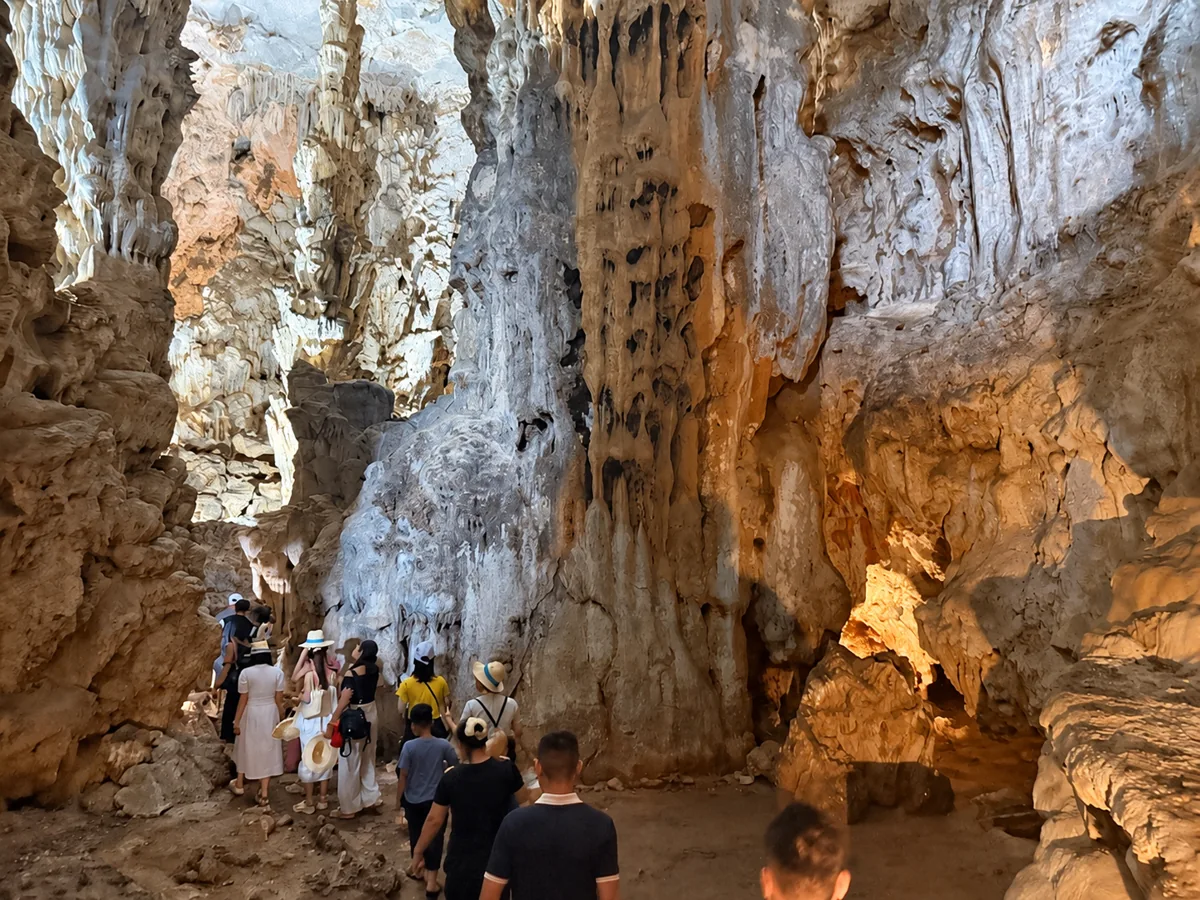
At Đầu Gỗ Cave, pause to look from ceiling to floor instead of rushing between photo spots. These three details can give your visit a story even without geological expertise.
1. Stalactites, stalagmites and columns
Đầu Gỗ Cave is on Đầu Gỗ Island in Hạ Long Bay's core area. The management authority's geology article of 18 July 2026 explains that water seeping through limestone carries dissolved minerals. As conditions change, minerals precipitate and gradually build cave formations.
Stalactites hang from the ceiling; stalagmites grow from the floor. When they join, they can form a column. Ask a guide which kind you are looking at, as well as what shape it resembles.
From a safe place on the visitor path, choose a ceiling detail and then look down. You need not find all three forms in one place. One wide photograph and one detail often tell a clearer story than several similar shots.
2. Lighting does not identify the rock
The authority's article on cave lighting, published 25 June 2026, mentions Đầu Gỗ's broad entrance and the combination of direct light with light scattered by vegetation outside. A formation can look different according to viewpoint and illumination.
Distinguish colour under particular lighting from conclusions about minerals. A phone photograph with processed colours is especially unsuitable for identifying rock types. Note whether a photograph was taken near the entrance, deep inside or under artificial lighting.
With children, ask where the brightest area is and where its light comes from. This adds something to explore beyond imagined shapes without turning the outing into a test.
3. Ask what a fossil cave means
The official geology source classifies Đầu Gỗ as an ancient underground cave, or fossil cave. This concerns its origin and position during landscape change; it does not guarantee visitors will see animal fossils along the path.
Ask why a cave once associated with groundwater now sits above sea level. Connecting the explanation to the surroundings brings natural history into the visit. You need not memorise geological ages, and the age of the limestone layer is not the exact age of each stalactite.
4. Leave room for others when taking photographs
Agree to stop only where permitted, take photographs briefly and move on. Do not walk backwards while watching a screen or leave the path for an unobstructed view. Use your camera's zoom rather than approaching distant formations.
Do not touch, break or clean formations for a better picture. Take rubbish away and follow site instructions. People in a distant frame can help convey scale, provided their privacy is respected.
The image is archival material from the management authority's website, AI-enhanced for clarity and compressed for loading. It does not show today's conditions or visitor numbers.
5. Confirm the actual stop before booking
The official itinerary catalogue includes Đầu Gỗ in VHL1 and VHL5. A route name does not confirm every sailing's services. Ask whether your cruise enters the cave, how much time is allocated and what to prepare for anyone needing walking assistance.
Add three prompts to your notes: “stalactites and stalagmites”, “where the light comes from”, and “what fossil cave means”. These are editorial observation suggestions, not an official guided route. Keep to the permitted path and your group's pace.
Sources were checked on 24 October 2026. Reconfirm sailing schedules and visiting conditions close to departure.
Source links
Image credit: Hạ Long–Yên Tử World Heritage Management Board, Đỗ Nhàn article dated 18 July 2026 on halongbay.com.vn. Archival image with clarity adjusted using ChatGPT Images, original landscape preserved; not current conditions.