
Quảng Ninh Museum: mining stories through a mine cart
Look beyond the black-glass façade and use a mine cart to explore the work, people and history of the coal region.
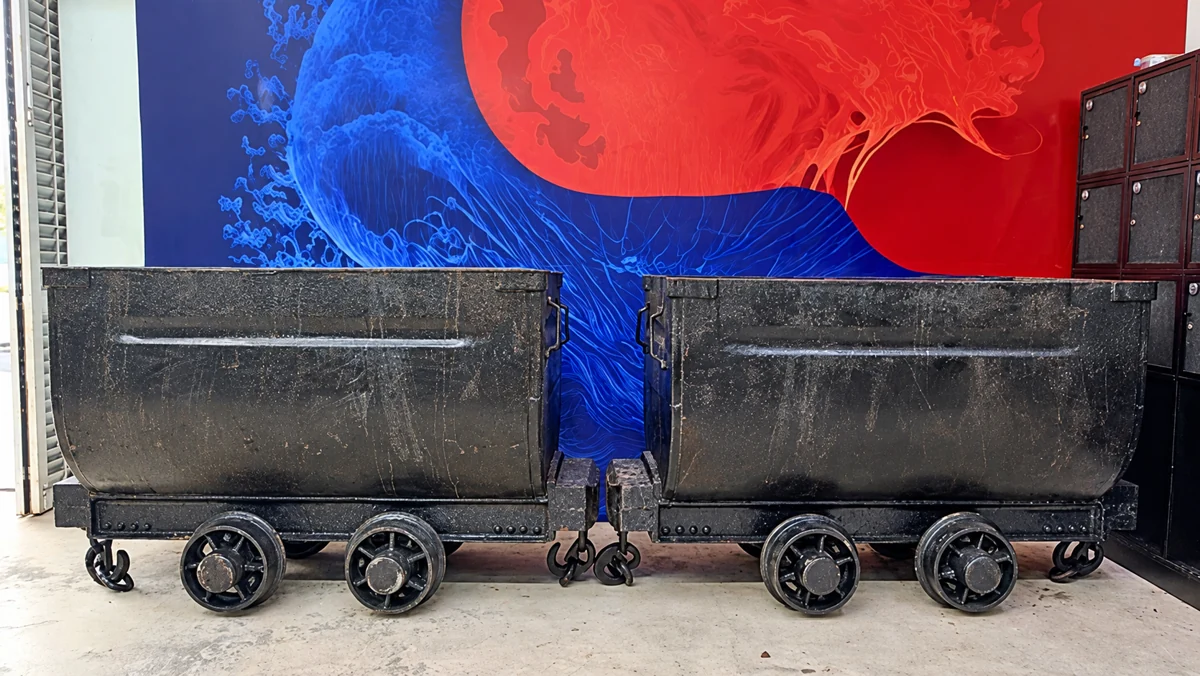
At Quảng Ninh Museum, you can take home more than a photograph of the black-glass façade. Ask what work a mine cart once did, and why a working tool becomes a museum object. This approach suits curious children and visitors who want to understand the coal region rather than simply pass through exhibition rooms.
The cover shows two mine carts in archival material about a 2025 acquisition, published by Quảng Ninh Museum–Library. ChatGPT Images enhanced its sharpness; the image does not establish where the carts are displayed now.
Start with one cart
According to the museum, on 15 August 2025, Hòn Gai Coal Company–TKV handed over two one-tonne mine carts used around the 2010s, together with rail sections and related materials. This acquisition happened in 2025; it was not a new event in October 2026.
A cart cannot tell its whole story apart from the rails and the work it supported. Read the object's name, former user and date on its label before studying its structure. Wear marks can prompt questions, but appearance alone does not establish age or mining location.
Three questions for a more thoughtful visit
- What stage of the work was this object used for? Look at the label or ask a guide.
- Which details helped it do that job? Study wheels, containers or joints instead of only reading the name.
- Is it an original object, a model or a reconstruction?
Children can find one detail and describe it in a sentence. Adults need not know every answer: “Let's read the label together” is more useful than guessing. Do not touch, climb on or enter a display unless allowed.
Connect the façade with the story inside
Quảng Ninh Portal describes the museum's coal-inspired architecture by Salvador Perez Arroyo, and a coal-mining history exhibition on the third floor. The building's black exterior can introduce the relationship between architecture and local life.
Choose one story to follow rather than trying to see everything. After examining a tool, find related photographs or interpretation. Moving slowly can leave a lasting memory even during a short visit.
Location and details to confirm
The museum is on Trần Quốc Nghiễn Street, beside 30/10 Square, in Hạ Long. Quảng Ninh Museum–Library publishes 0203 656 1699 as its contact number. Give your planned date and ask whether the mining exhibition is open that day.
Acquiring an object does not mean it is currently displayed. Ask in advance if you particularly want to see the two carts pictured. This article does not confirm your visit's ticket prices, opening hours or guided-tour schedule.
Distinguish past programmes from current availability
A Quảng Ninh Portal article dated 17 June 2026 reported history-education activities and a one-month trial of evening visits starting on 30 May 2026. This illustrates programme development but does not establish that night tours continued in October.
For a short visit, consider daytime exhibits and some time around the square. Confirm themed programmes and children's activities separately, including participation requirements. The museum offers a chance to understand the people behind the coal region.
Sources
- Quảng Ninh Museum–Library: coal-mining object acquisition.
- Quảng Ninh Portal: architecture and exhibition spaces, 10 June 2022.
- Quảng Ninh Portal: history education, 17 June 2026.
Sources were checked on 24 October 2026. The observation suggestions are editorial ideas, not a museum-issued tour programme.
Image credit: Quảng Ninh Museum–Library. Two mine carts in archival material about the 2025 acquisition. Sharpness enhanced with ChatGPT Images; not confirmation of their current display location.